
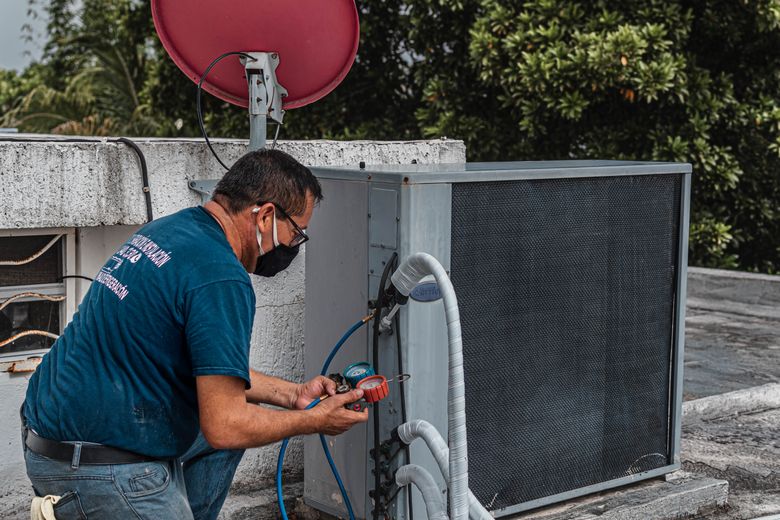
When a furnace quits in January, nobody in Frederick or Glen Burnie flips through a phone book. They grab a phone and search “furnace repair near me.” Then they call one of the first 3 companies they see.
SEO for HVAC companies is the work that puts you in that short list. It covers your Google Business Profile, your website, your reviews and the other sites that mention you.
This guide walks through each piece, in the order we’d tackle it for a Maryland heating and cooling contractor.
The short answer
SEO for HVAC companies comes down to 5 jobs:
- Set up your Google Business Profile with the right category and service area.
- Build a page for each service and each main city you work in.
- Earn steady reviews and reply to every one.
- Keep your name, address and phone number the same across directories.
- Track calls and booked jobs, beyond rankings alone.
The map results bring most HVAC calls, so start with the first job and the third.
Why search matters so much for HVAC
HVAC is a need-it-now service. A homeowner with no heat isn’t comparing 10 companies over a week. They pick fast, and they pick from what Google shows them.
Reviews shape that pick. In BrightLocal’s 2026 survey of US consumers, 68% said they’ll only use a business rated 4 stars or higher, up from 55% the year before. And 31% now want 4.5 stars or more (BrightLocal).
The same survey found 45% of consumers now use ChatGPT or other AI tools for local recommendations, up from 6% a year earlier. Those tools draw on the same reviews, listings and web pages that Google does. So the work below helps you in both places.
Step 1: Get your Google Business Profile right
Your Business Profile decides whether you appear in the map results. For an HVAC company, it’s the most valuable listing you have.
Pick the right primary category. “HVAC contractor” is the usual choice. Add secondary categories only for work you do, such as “Air conditioning repair service” or “Furnace repair service.”
Set your service area. Most HVAC companies work at customers’ homes. Google’s own guidance says that if you don’t serve customers at your business address, you should remove the address from your profile and list a service area instead (Google Business Profile Help). List the counties or cities you cover, like Montgomery County, Anne Arundel County or Baltimore County.
Fill in your services. Add each service with a short description: AC repair, heat pump installation, furnace replacement, duct cleaning, maintenance plans. These help Google match you to specific searches.
Add photos of your own work. Your vans, your techs, finished installs. Stock photos don’t build trust.
Post during the seasons. A spring post on AC tune-ups and a fall post on furnace checks keep the profile active. They also give searchers a reason to call.
Step 2: Build pages for each service and city
Your website backs up your Business Profile. Google reads it to judge what you do and where.
Service pages
Give each main service its own page. One page for AC repair, one for heat pumps, one for furnace replacement, and so on. Each page should say:
- What the service is and the signs a homeowner needs it
- The brands and system types you work on
- Whether you offer emergency or same-day service
- How to book, with your phone number near the top
A single “Services” page listing 15 things in bullets won’t rank for any of them.
City pages
If you cover Columbia, Ellicott City and Laurel, a page for each can help, as long as each one says something specific. Mention the neighborhoods you serve, the housing stock (older rowhomes in Baltimore need different work than new builds in Clarksburg) and a job you’ve done there.
Pages that swap one city name for another and change nothing else add little. They can also drag down the rest of the site.
Speed and phones
Most emergency searches happen on a phone. Your site needs to load fast and put the call button where a thumb can reach it. Google suggests a loading time (Largest Contentful Paint) under 2.5 seconds (Google Search Central). Our technical SEO work starts with this check.
Step 3: Earn reviews every week
Reviews help you rank in the map results. They also decide who gets the call once you’re there.
The simplest system is to ask at the end of every job. Have the tech send a text with your review link before they leave the driveway. Customers are most willing right after you fixed their problem.
Some rules to follow:
- Reply to every review, good and bad. Keep replies short and specific. A generic “Thanks for your business!” on every review reads as automated.
- Never buy reviews or pay for them. The FTC banned buying and selling fake reviews in August 2024, with civil penalties for businesses that knowingly break the rule.
- Don’t ask only happy customers. Asking everyone is safer, and Google’s policies don’t allow selective asking.
Spread the requests out. 4 reviews a week for a year looks far more natural than 50 in a month and then nothing.
Step 4: Clean up your listings across the web
Your company appears on dozens of sites: Yelp, Angi, the BBB, Nextdoor, manufacturer dealer locators, your local chamber. Google cross-checks these.
If one site lists an old phone number or a former address, it muddies the picture. Search your company name and fix any listing that doesn’t match your Business Profile exactly. Our citation building service does this across the main directories.
Dealer locators are worth a look on their own. If you’re a dealer for a major equipment brand, make sure your listing there is complete and links to your site. Those links carry weight.
Step 5: Earn links from Maryland sites
Links from other websites tell Google your business is trusted. For a local HVAC company, the best links are local:
- Your chamber of commerce or business association
- Local sponsorships, like a youth sports team or a school event
- Supplier and manufacturer pages
- Local news, for example a story on a heat wave or a community project
You don’t need hundreds. A handful from Maryland sites beats a pile of links from random blogs. Our link building page covers how we approach this.
Step 6: Track calls and booked jobs
Rankings are a means to an end. The number that matters is booked jobs.
Set up 3 things:
| What to track | How | Why it matters |
|---|---|---|
| Calls from your Business Profile | The profile’s own performance report | Shows how many calls the map listing drives |
| Calls from your website | A call tracking number on the site | Shows which pages bring calls |
| Form fills and online bookings | Google Analytics goals or your booking tool | Captures customers who don’t call |
Then compare month to month, and season to season. HVAC demand swings with the weather, so July against January tells you little. Compare this July with last July.
Common HVAC SEO mistakes
We see the same few problems on contractor websites:
- A home address on a service-area profile. This goes against Google’s guidance and can get a profile suspended.
- Thin city pages. Dozens of near-identical pages with only the town name swapped.
- No pricing guidance at all. You don’t need a price list. A page explaining what affects the cost of a new system answers a question many buyers search for.
- Phone number hidden in the footer. Put it at the top of every page.
- Ignoring maintenance plans. Searches for tune-ups bring repeat customers. Give them their own page.
How long does HVAC SEO take?
Business Profile fixes can show up within weeks. Ranking new service and city pages usually takes several months, depending on your competition. Baltimore and the DC suburbs are more crowded than Western Maryland or the Eastern Shore.
For what each budget buys, see our guide on how much SEO costs. Our own plans run $2,500 to $4,000 a month, and we work month to month.
Where to start this week
If you only have an hour, do these 3 things:
- Check your Business Profile category, service area and phone number.
- Text your last 10 customers a review link.
- Search “AC repair” plus your town on your phone and see who shows up.
Many of the same steps apply to plumbers, electricians and roofers. Our guide for home service contractors covers the overlap, and our local SEO page explains how we run it.
If you’d like help, contact us. Tell us which part of Maryland you cover and which services you want more calls for. We’ll show you where you stand in the map results today and what we’d fix first. You can also see the Maryland cities we serve.
Frequently Asked Questions
For most HVAC companies, yes. Homeowners search when something breaks and call one of the first companies they see. A strong Google Business Profile and clear service pages put you in that group, and each booked job can be worth hundreds or thousands of dollars.
Only if customers visit you there. Google says service-area businesses that don’t serve customers at their address should remove it and list a service area instead.
There’s no fixed number. Aim to match or beat the top 3 companies in your area, and keep new reviews coming every week. Recent reviews matter to customers as much as the total.
Local Services Ads are paid listings at the top of the results, and you pay per lead. SEO earns the map and organic results below them without a per-lead cost. Many HVAC companies run both.

Diane Caldwell
Diane is an SEO and demand generation expert with over 10 years of experience building and managing SEO programs for local and national businesses.